How Roster Adjustments During Peak Injury Periods Influence Tactical Approaches in NHL Games and NBA Playoff Runs
Written by Willa Müller · Aug 19, 2026
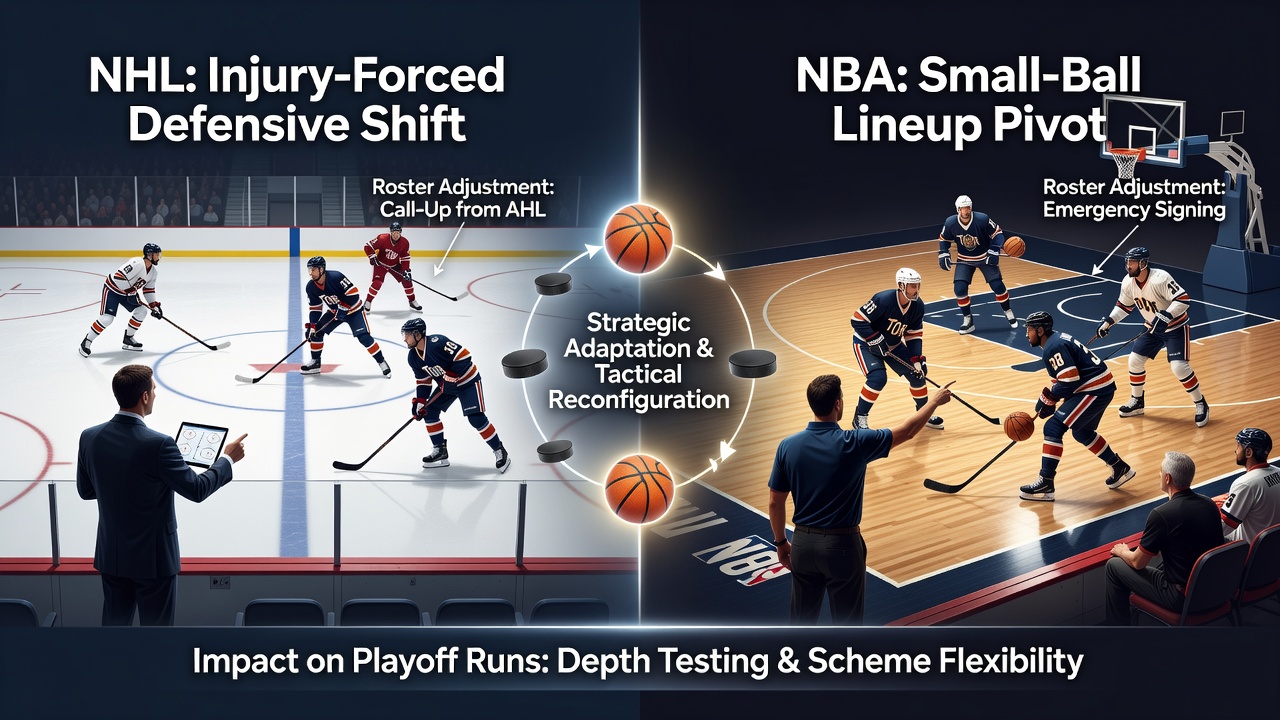
How Roster Adjustments During Peak Injury Periods Influence Tactical Approaches in NHL Games and NBA Playoff Runs
Teams across the NHL and NBA face recurring challenges when injuries cluster during critical stretches, forcing general managers and coaches to activate depth players while reshaping lineups and rotations. Data from league tracking systems shows that mid-season injury peaks in hockey often coincide with condensed schedules, prompting shifts toward defensive zone coverage and reduced forechecking pressure when top scorers sit out. Observers note that such changes appear most pronounced in February and March when fatigue compounds existing ailments across rosters.
NHL Roster Shifts and On-Ice Tactical Adaptations
During stretches where multiple forwards or defensemen land on injured reserve, NHL clubs frequently promote players from the American Hockey League, altering established line chemistry and power-play units. Research indicates these call-ups lead to increased emphasis on structured neutral-zone play rather than aggressive transition attacks, as newer combinations require time to develop timing on breakouts. Coaches respond by shortening bench rotations and pairing experienced stay-at-home defensemen with younger partners to maintain positional discipline in their own zone.
One study from the University of British Columbia examined how teams adjust forecheck schemes when star wingers miss extended periods, revealing a measurable uptick in dump-and-chase entries instead of controlled zone entries. University of British Columbia research further highlights that penalty-kill units often simplify their pressure packages when key penalty killers are unavailable, relying more on box formations and less on aggressive stick lifts. August 2026 off-season reviews are expected to analyze these patterns from the prior campaign, providing clubs with data to refine depth-chart planning ahead of training camps.
NBA Playoff Rotations Under Injury Strain
In the NBA postseason, injury clusters among rotation players prompt head coaches to experiment with smaller lineups or switch-heavy defensive schemes that compensate for missing rim protectors. League statistics demonstrate that teams losing primary ball-handlers tend to increase pick-and-roll frequency while reducing isolation plays, allowing secondary creators to operate within structured sets. Depth signings and two-way contract activations become pivotal, particularly when backcourt injuries force adjustments to perimeter defense and transition defense principles.
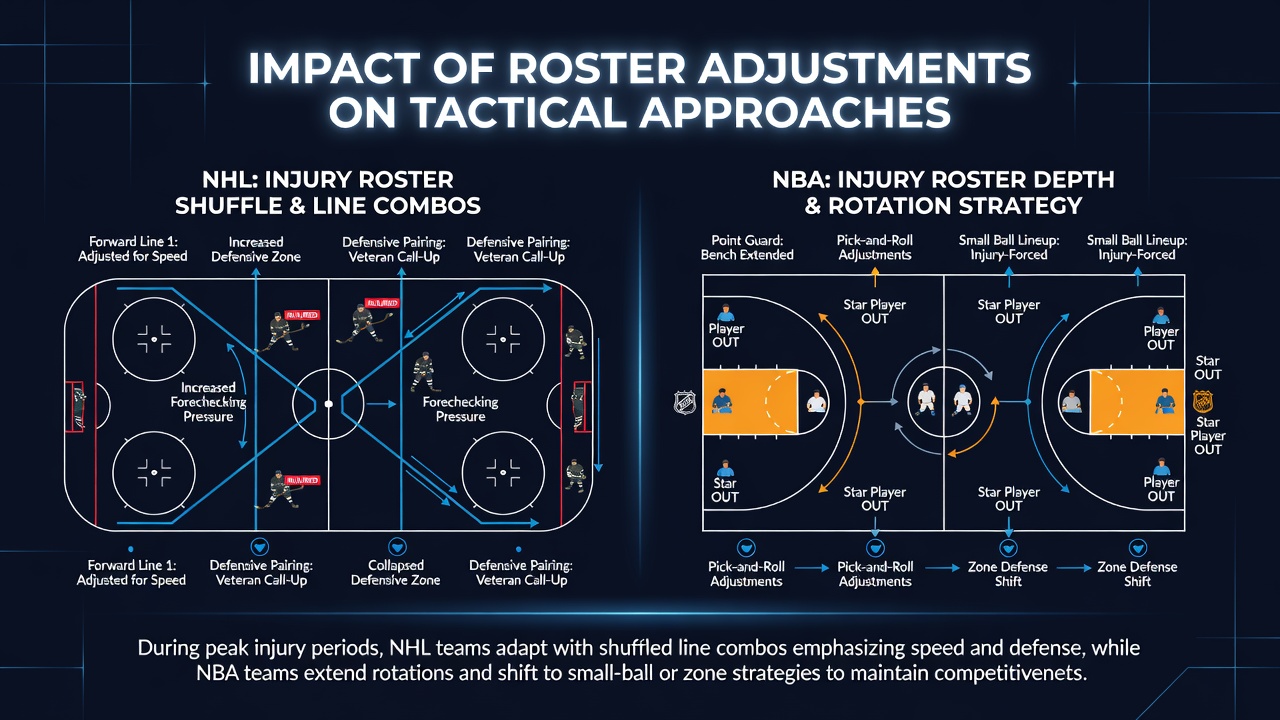
Analyses of recent playoff series show that organizations facing multiple absences often extend minutes for versatile wings capable of guarding multiple positions, which alters spacing on offense and forces opponents to adjust their own screening actions. Those studying these trends observe that such roster maneuvers correlate with higher assist-to-turnover ratios in certain matchups, as teams prioritize ball movement over individual creation when star scorers are sidelined. A report compiled by Sport Integrity Australia examined similar patterns across North American leagues, noting parallels in how basketball clubs manage load during compressed playoff schedules.
Comparative Patterns Between the Leagues
Both leagues exhibit comparable responses when injury waves hit during high-stakes periods, yet differences emerge in how salary-cap constraints and playoff structures shape the available options. NHL clubs lean on taxi-squad recalls and long-term injured reserve placements to maintain roster flexibility, while NBA organizations utilize hardship exceptions and two-way deals more frequently during postseason runs. Data compiled across multiple seasons reveals that tactical adjustments tend to favor conservative approaches in hockey, emphasizing shot suppression and goaltender workload management, whereas basketball adjustments often prioritize pace control and defensive versatility.
Teams that successfully integrate new personnel during these windows frequently maintain competitive records by emphasizing simplified systems that reduce decision-making complexity for recently promoted athletes. External factors such as travel demands and back-to-back games amplify the effects of these roster changes, leading to further tweaks in substitution patterns and timeout usage. Researchers continue to track these dynamics through publicly available play-by-play logs and injury reports released by each league office.
Conclusion
League-wide data and academic examinations confirm that roster adjustments triggered by injury peaks produce measurable shifts in both NHL and NBA tactical execution. Organizations that anticipate these periods through proactive depth development maintain greater flexibility when forced to alter established strategies midseason or during playoff series. Ongoing analysis of performance metrics provides clubs with clearer frameworks for responding to similar challenges in future campaigns.