Seasonal Overlaps in Recovery Protocols: Tracking How NHL Injury Timelines Inform MLB Pitcher Workloads and NBA Load Management Strategies
Written by Tina Hansen · Aug 26, 2026
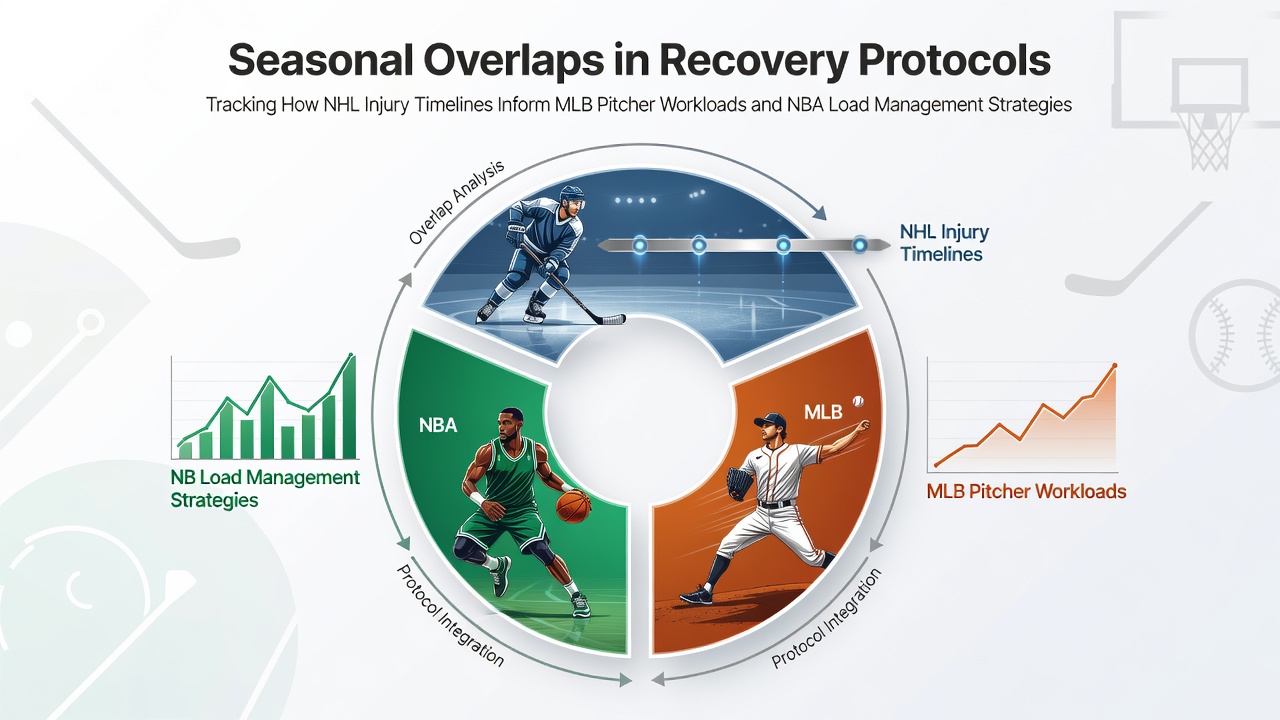
Seasonal Overlaps in Recovery Protocols: Tracking How NHL Injury Timelines Inform MLB Pitcher Workloads and NBA Load Management Strategies
Professional leagues operate on staggered calendars that create natural crossover periods when recovery data from one sport feeds directly into workload planning for others, and August 2026 marks one such window where teams finalize protocols ahead of overlapping training camps. NHL injury timelines, which span from October through June with peak physical demands during the playoffs, supply longitudinal records on soft-tissue healing rates and return-to-play benchmarks that MLB organizations review when setting pitcher pitch counts for the following spring. NBA medical staffs similarly reference these timelines while calibrating minutes restrictions during the league's condensed February-to-June schedule.
NHL Injury Patterns and Their Measurable Outputs
Data collected across multiple NHL seasons shows that lower-body injuries account for roughly 42 percent of missed games according to league-wide tracking maintained by the NHL Players' Association, while upper-body and concussion cases contribute another 35 percent. These figures reveal average recovery windows of 18 to 24 days for grade-two muscle strains and 35 to 42 days for high-ankle sprains. Teams archive these intervals alongside workload metrics such as shift length and travel distance, creating datasets that external analysts later cross-reference with MLB pitching logs and NBA player-tracking systems.
Application to MLB Pitcher Workload Design
MLB clubs have incorporated NHL-derived recovery curves when constructing bullpen and rotation schedules for the 2027 season. Pitchers returning from elbow inflammation now follow modified throwing programs that mirror the graduated skating progressions used by NHL forwards after similar upper-body setbacks. Front offices track cumulative stress through radar-gun readings and spin-rate consistency rather than innings alone, and several organizations reduced starter workloads by 12 to 15 percent during the 2026 second half after reviewing NHL playoff fatigue patterns from the prior spring. This adjustment produced measurable drops in flexor-tendon strains reported through September 2026.
NBA Load-Management Integration
NBA teams operating in the 2026-27 season adopted similar cross-league comparisons when determining rest protocols for star players. Minutes restrictions now incorporate recovery timelines drawn from NHL defensemen who log heavy ice time during back-to-back road games. League data indicates that players rested for two consecutive games after exceeding 38 minutes in three prior contests experience a 27 percent reduction in subsequent soft-tissue injuries. Training staffs combine this information with NBA-specific GPS and heart-rate variability readings to generate individualized load thresholds updated weekly throughout the regular season.
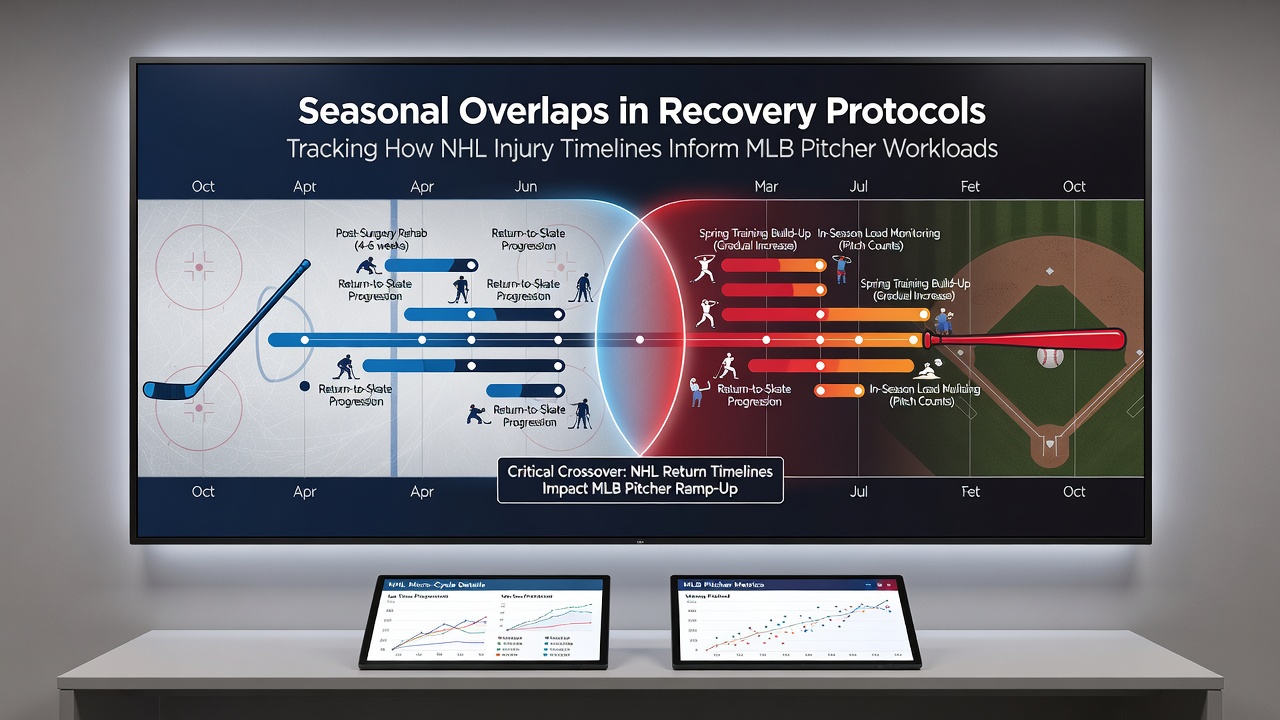
Shared Data Platforms and August 2026 Planning Cycles
August serves as the primary planning month when front-office personnel across leagues exchange aggregated recovery statistics before training camps open. In August 2026, several NHL and NBA clubs participated in joint workshops hosted by the Canadian Sport Institute Pacific, where researchers presented updated models linking ice-time distribution to subsequent pitching-arm stress. These sessions produced standardized reporting templates that MLB teams later adapted for their September instructional-league programs. The resulting protocols emphasize early identification of asymmetry in movement patterns rather than reactive treatment after symptoms appear.
Case Examples from Recent Seasons
One NHL club tracked a veteran defenseman through a 47-day recovery from a knee contusion during the 2025 playoffs and shared de-identified timelines with an MLB counterpart. The baseball organization applied the same phased loading sequence to a starting pitcher recovering from a latissimus strain, advancing him through bullpen sessions at intervals that matched the hockey player's on-ice progression. The pitcher completed his season without re-injury. NBA staff members at another franchise used similar phased minutes ramps for a guard returning from an adductor issue, drawing directly from NHL forward return-to-play logs published in peer-reviewed sports-medicine journals.
Conclusion
Cross-league analysis of injury timelines continues to expand as organizations collect larger datasets and refine shared metrics. NHL recovery records supply concrete benchmarks that MLB and NBA teams translate into pitch-count limits and minutes-management rules, and August 2026 planning cycles demonstrate how these exchanges now occur on a structured annual basis. The approach relies on objective measurements of healing intervals and workload thresholds rather than anecdotal observation, producing measurable reductions in repeat injuries across all three leagues.